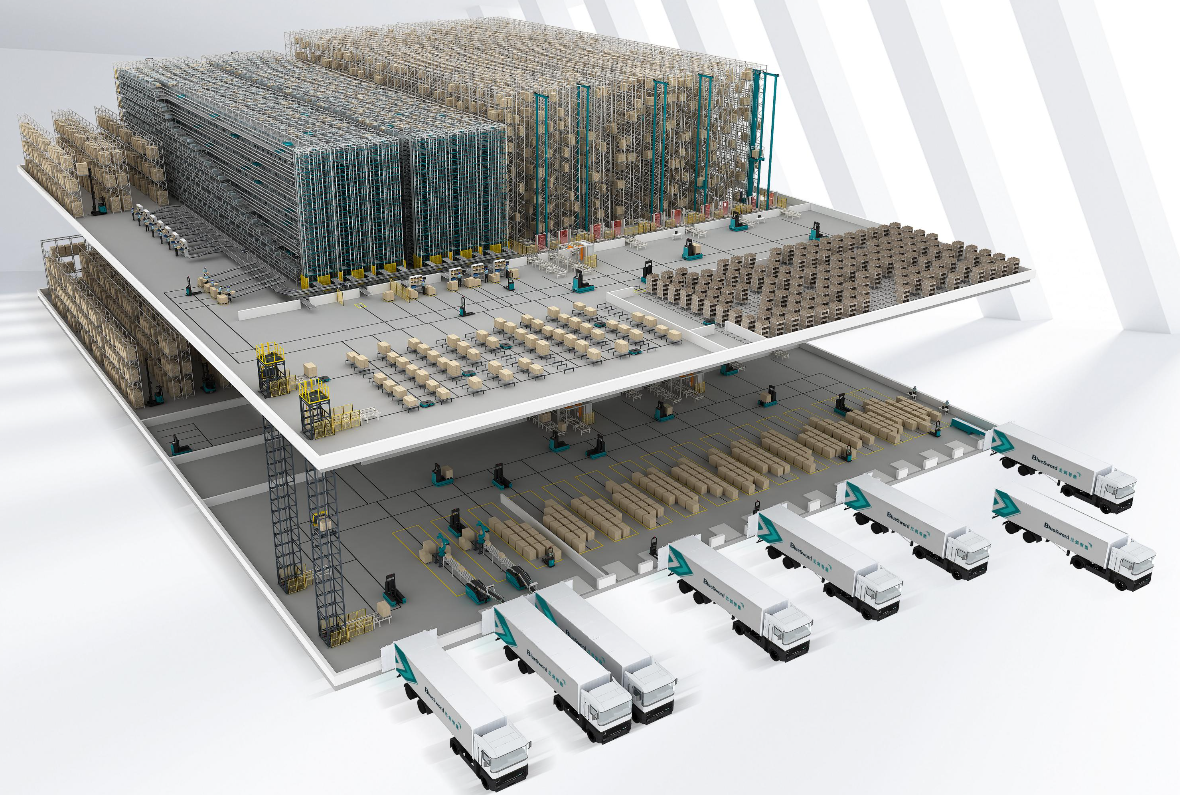
Framework rationale and operational objectives
The integration of custom logistics software into a physical layout must begin with a deterministic framework that aligns control logic, material flow, and maintenance access. This discussion treats the facility as a clinical system: inputs (load unit staging), processes (conveyance, storage, retrieval), and outputs (shipping windows). Early-stage decisions influence racking density, throughput, and the selection of automated equipment such as a Pallet Shuttle, which alters aisle planning and control-layer requirements.
Step 1 — Spatial mapping to control layers
Conduct a spatial audit that records bay dimensions, clearances, and electrical distribution under laboratory-style precision. Create a zonal map with three control layers: realtime device control (shuttle commands), supervisory coordination (task allocation), and integration interface (WMS/WCS). Maintain explicit tolerances for aisle width and platform approach to avoid interference with drive-in racking or shuttle insertion cycles. Track battery management system parameters and thermal constraints near high-density lanes.
Step 2 — Modular software domains and hardware contracts
Define software domains as immutable modules: path planner, collision manager, inventory state model. Each module should have a hardware contract—API signatures, timing budgets, and failure modes. For pallet shuttle deployments, include a deterministic shuttle API that reports position, battery state, and load presence. Contracted modules simplify vendor interactions and allow comparison across pallet shuttle manufacturers when assessing interface latency and mechanical tolerances.
Verification, validation, and field anchoring
Establish a staged verification regimen: simulation, closed-loop bench testing, and phased field validation. Simulate peak-period throughput using conservative cycle-time distributions; run bench tests to validate shuttle insertion times and rack-clearance behavior. Anchor the validation to a real-world reference: lessons from operational shifts at the Port of Rotterdam and the logistics adjustments during the 2020 supply surge provide high-level precedence for phased rollouts and buffer sizing. Such anchors inform sizing of buffer lanes and reserve battery capacity.
Common mistakes and corrective controls
Typical errors include under-specifying fail-safe behaviors, ignoring electromagnetic interference in dense rack arrays, and conflating functional scope between WMS and task controller. Implement corrective controls: hard interlocks at the fieldbus layer, watchdog timers on shuttle command streams, and redundant position feedback. —A brief note: ensure load unit profiling (weight and center-of-gravity) is part of commissioning; it changes acceleration profiles and rack wear rates.
Operational teardown and data requirements
During operational teardown, capture three datasets per shift: task latency (command-to-actuation), position variance (mm), and energy per cycle (Wh). Use these to tune PID parameters in path planners and to adjust reserve thresholds in the battery management system. When modeling sensitivity, treat {main_keyword} as the independent throughput variable and {variation_keyword} as the perturbation affecting cycle times; this yields a reproducible baseline for software updates and vendor comparison.
Alternatives and procurement considerations
Assess alternatives on measurable axes: mean time between failures, mean repair time, and spatial efficiency (pallets/m²). Compare Pallet Shuttle systems with mini-load cranes and shuttle-plus-AGV hybrids. Solicit controlled demonstrations from shortlisted pallet shuttle manufacturers, and require telemetry logs from pilot runs to validate declared cycle times. Prioritize vendors who supply deterministic APIs and transparent maintenance metrics.
Advisory: three evaluation metrics (golden rules)
1) Cycle determinism: require cycle-time histograms and a 95th-percentile bound for peak operations. 2) Integration latency: cap end-to-end command latency at a predictable value aligned with your supervisory scheduler. 3) Maintainability index: verify mean repair time under field conditions and spare-part lead times. Apply these rules during vendor selection and incorporate them into contract SLAs.
Adopting this framework reduces commissioning iterations and yields quantifiable operational gains—measured in reduced idle cycles and predictable throughput. BlueSword. –