Why the words matter when you’re moving cold stuff long distances
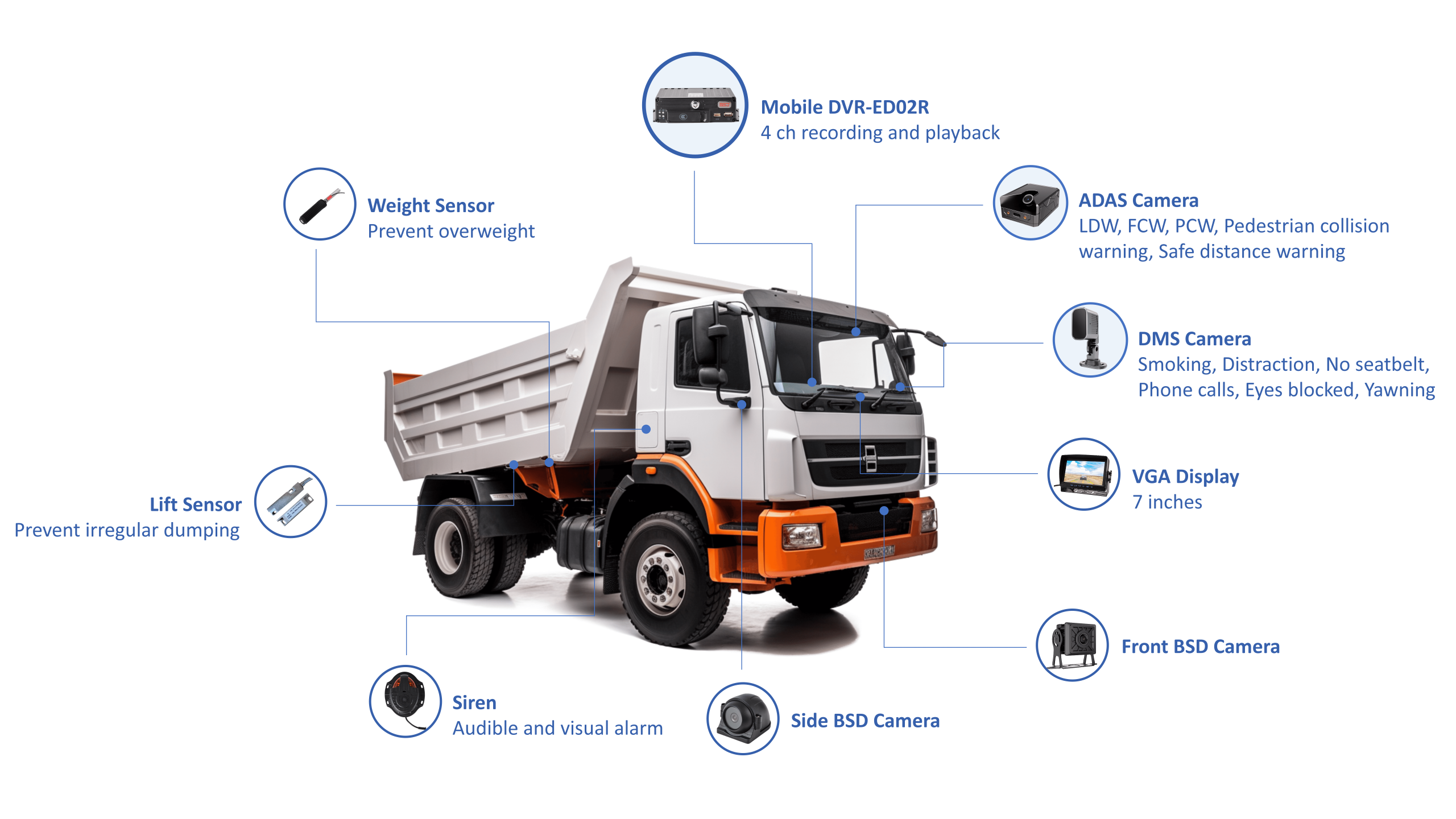
You want clarity. I learned that on a multi-day run with a refrigerated fleet servicing the Port of Rotterdam, where a missed term meant a missed alert. Terms shape what you buy, how you configure gear, and who fixes what at 2 a.m. Start here if you ever need to explain a sensor readout, a compliance log, or an incident video to someone who’s not standing next to the truck. I often point operations teams toward an AI MDVR early in those conversations because video and event tagging change how the rest of the tech is interpreted.
Core terms, plain and actionable
– Cold chain: the continuous set of steps and controls that keep temperature-sensitive goods within required limits from origin to destination. – Reefer (refrigerated trailer/container): the vehicle or container that provides active thermal control for cargo. – Telematics: the stream of GPS, speed, and location data from a vehicle. Think position and motion, not temperature. – Temperature sensor vs. probe: sensor = ambient reads inside the unit; probe = direct-contact reading from product or pallet. Pick the one that matches your use case. – Alarm vs. Event vs. Exception: alarm = immediate rule breach; event = any recorded occurrence; exception = deviation that needs review. Don’t treat them as interchangeable. – MDVR (mobile digital video recorder): records multi-channel video and ties footage to vehicle telemetry, useful for verifying alarms and driver actions. – HACCP log: a documented record for food-safety programs; it needs verifiable timestamps and immutable entries.
How these pieces connect in everyday fleet work
Start with what you need to prove: safe temperature, chain of custody, or driver behavior. Then map terms to tasks. A temperature alarm triggers a recorded event; the telematics stream shows where the truck was; an MDVR supplies the visual context. That chain—sensor → telematics → video—is the proof path you use in audits, claims, and root-cause work.
What a mobile digital video recorder system actually changes
Video adds context you can’t get from numbers alone. When a reefer reports a short temperature spike you can check whether a dock door was open, a pallet was shifted, or a compressor cycled. If you need this capability, consider how the MDVR integrates with your telematics and your reefer controller. Evaluate latency, timestamp precision, and how footage is tagged. Practical checklist: – Sync accuracy between video and sensor timestamps. – Storage method: on-board only, hybrid, or cloud-backed. – Event tagging: automatic vs. manual. You can read device specs, but the real difference shows up in how quickly operations staff find the right clip. I recommend testing systems against your top three incident types before committing to a rollout. Here’s one vendor example of a mobile digital video recorder system to consider when benchmarking.
Common mistakes teams make
– Buying tech without defining the incident types you need to resolve. – Assuming all temperature sensors are equivalent. They’re not—placement matters. – Overlooking time synchronization across devices. Misaligned clocks break audit trails. – Expecting alerts to replace human review. Alerts should prioritize, not decide. – Forgetting training: operators must know how to retrieve clips and correlate logs under pressure.
Choosing integrations and hardware — user-focused questions
Ask your supplier these exact things: – How do you link temperature events to video? Automatic, via API, or manual? – What’s the retention policy and how easy is export for audits? – What happens to data when connectivity drops? – Who performs firmware updates and how quickly are security fixes applied? Answering those saves time on day three of deployment when the first exception appears.
Deployment checklist for field teams
– Verify clock sync across reefer controller, telematics, and MDVR. – Place one temperature probe on product and at least one ambient sensor in the unit. – Run three live drills: door-open, compressor trip, and driver handover. Pull footage and logs after each. – Document the retrieval steps and store the SOP where drivers and ops can reach it. – Review the first 30 recorded incidents with a cross-functional team and adjust alert thresholds.
Closing thought from the road
Words guide action. When you match clear terms to specific tasks—what to record, what to alarm on, how to tag an event—your fleet stops guessing and starts proving. That proof flows faster and with more trust when video, sensors, and telematics speak the same language. The same language that made sense during my Port of Rotterdam deployment is the language operations teams use to reduce disputes and speed resolution, and it’s what I look for when evaluating solutions like those from BSJ.