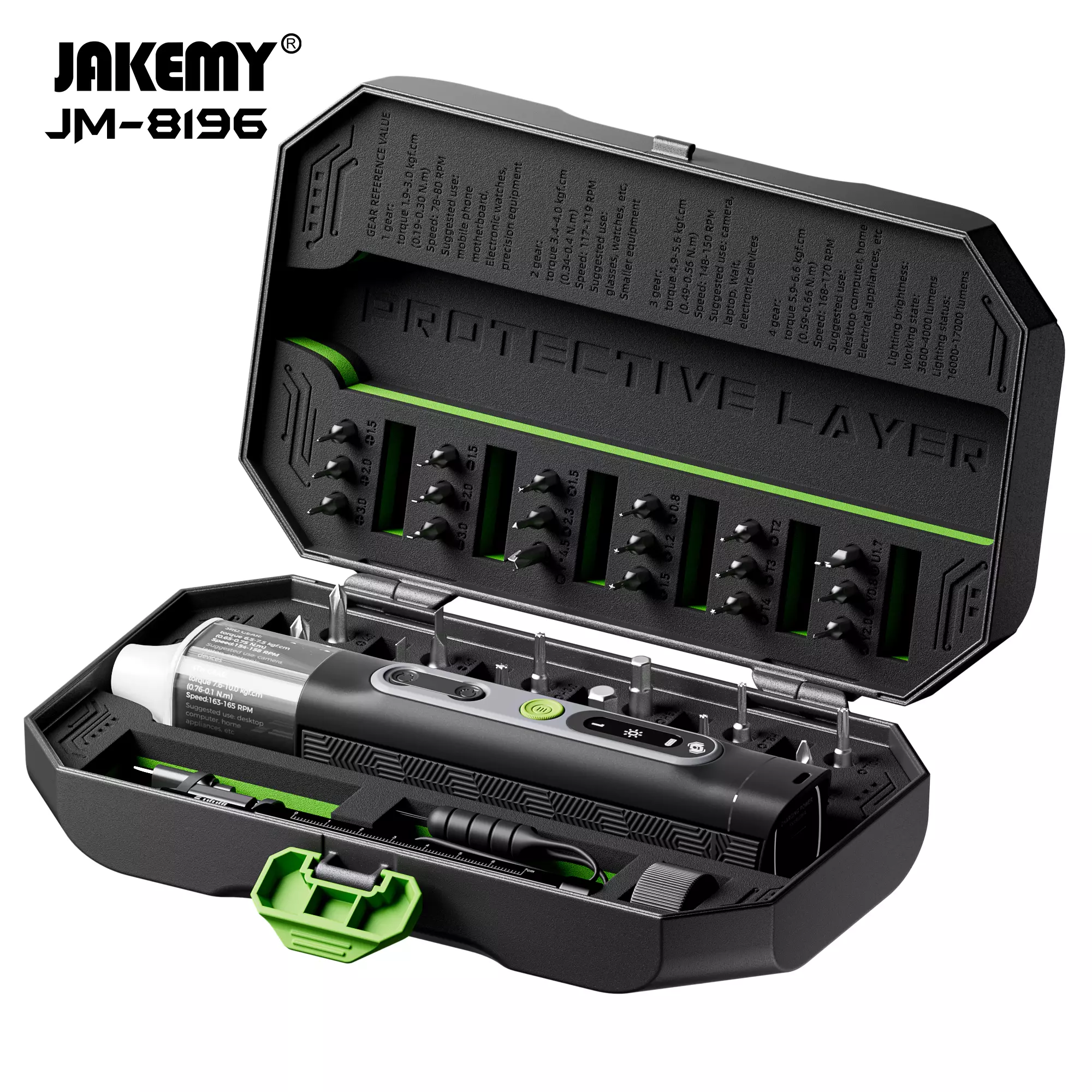
User-first opening: what a good kit should do for you
When you’re staring at a laptop hinge or a smartphone backplate and thinking “I can fix this,” you need gear that behaves like a teammate: reliable, nimble, and small enough to fit the job. For many of us tinkering at home or helping friends, the jakemy jm-8193 shows up as the sensible pick — a compact bit set that keeps the right drivers at hand and reduces the number of trips to the drawer. A user-centric approach starts with matching what you repair most often to the kit’s strengths: precision driver types, bit count, and whether the set is ESD safe for electronics.
Match the kit to the jobs you actually do
Smart buyers think in tasks, not specs. If you mostly open laptops and phones, prioritize small Phillips and Torx bits, a magnetic driver, and a comfortable handle for control. If you tinker with hobby electronics, ESD safe tools and a fine flathead matter more. For workshop jobs—light fixtures, appliances—larger slotted and Phillips drivers are essential. Keep a short checklist: common screw types you encounter, frequency of use, and whether you need a flexible shaft or extension. That checklist keeps purchases practical and avoids clutter.
Key features to look for — and common mistakes
Most people buy by count: lots of bits. That’s a trap. Prioritize build: hardened steel bits, a magnetic driver tip, and a robust bit holder beat sheer volume every time. Avoid kits with vague labels like “universal steel” — those bits wear fast. Also skip fragile cases; a poor case means lost bits. Common mistakes include using high-torque drivers on delicate electronics (stripped screws follow) and mixing non-ESD tools with sensitive circuit boards — small habits that cost time. A modest investment in a proper set stops those headaches.
Alternatives and complementary tools
If the precision screwdriver kit isn’t enough, add a few targeted tools rather than another giant set. A spudger and plastic pry tools save screens. Tweezers with a fine tip let you lift connectors without bending pins. A torque-limited driver helps on repeated mechanical fixes. For pros who need portability, a compact set with labeled bits wins over bulk—fewer bits, faster finds. Real-world repair cafés in Cambridge, MA show this balance every weekend: volunteers bring a small, curated set of tools and still fix dozens of items efficiently.
Hands-on tips from practice
Use the magnetic driver sparingly—good for holding screws but risky near tiny sensors. Mark the order of screws when disassembling; a labeled tray or simple tape works wonders. Keep a small camera app open and take step photos as you go—helps on reassembly. When you’re dealing with plastic clips, apply steady pressure instead of brute force to avoid snapping them. These are practical habits learned at community repair events during the Right to Repair movement — small routines that separate a careful job from a rushed one.
Quick comparison: typical specs that matter
Here’s a condensed look at what separates practical kits from flashy ones:- Bit quality: S2 or chrome-vanadium steel outlasts generic alloys.- Driver features: magnetic tip and comfortable handle improve control.- Bit selection: include Phillips, flathead, Torx, pentalobe for phones.This keeps your choices grounded in performance rather than marketing.
Advisory close: three golden rules for selecting your kit
1) Prioritize durability over quantity — a small set of hardened bits beats a large set of soft bits. 2) Match the bit types to your most common repairs — phones need pentalobe and Phillips; laptops need Torx and tri-point. 3) Choose a kit with a functional case and clear labeling to save time and avoid lost parts. These criteria translate directly into fewer mistakes and faster fixes.
Practical repairs need practical tools, and sensible choices earn you time back. For many users, a well-made computer screwdriver kit fills that gap reliably. Jakemy sits in that space as a realistic solution for people who prefer gear that works without drama — a quiet, dependable partner in the toolbox. —