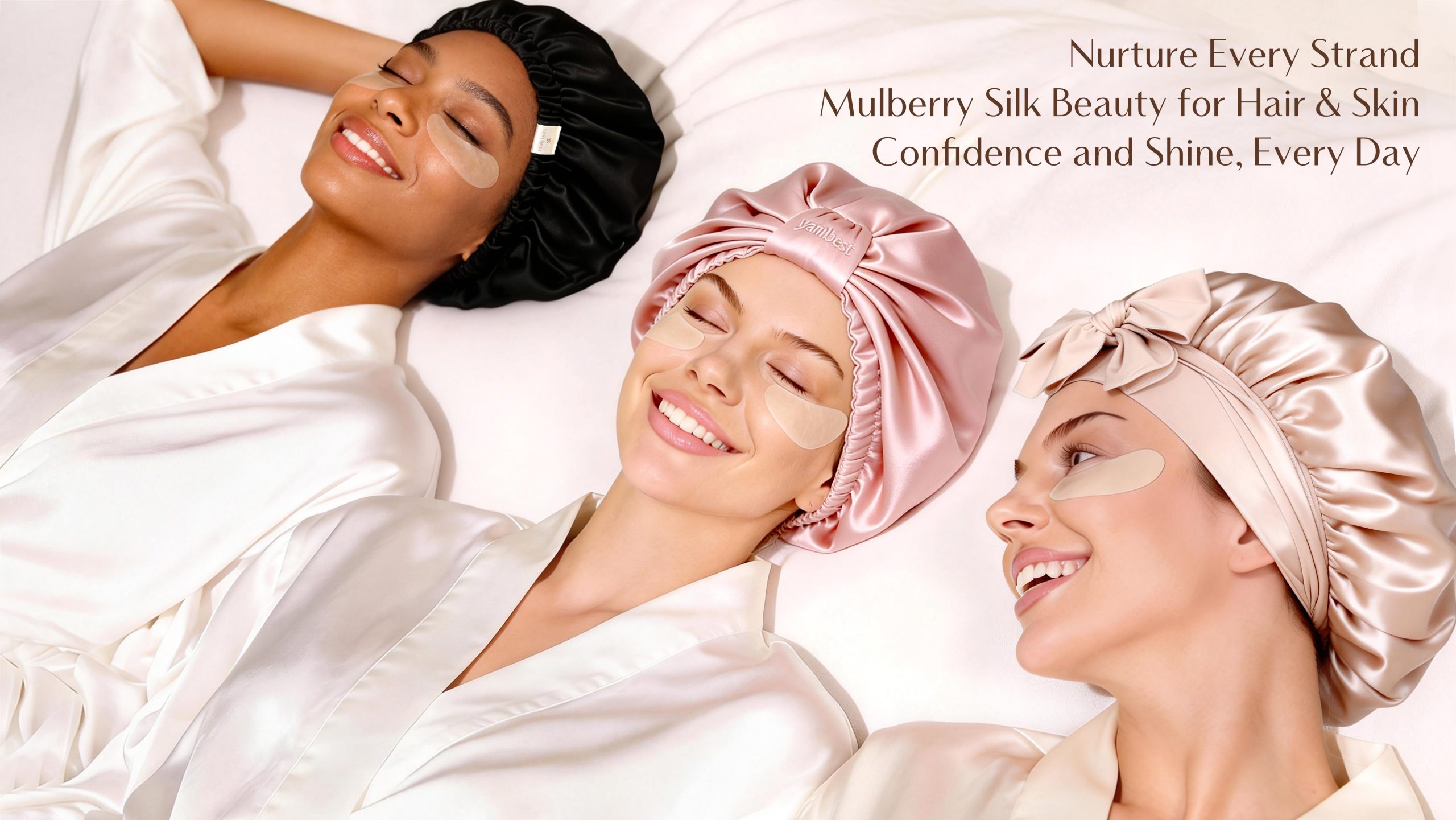
Clear stakes from the start
Choose wrong and your morning looks worse than needed. Choose right and you reduce breakage, cut styling time, and sleep without frizz. If you want fewer tangles and less friction while you sleep, try a silk pillowcase and notice the difference fast. This piece compares how silk and satin perform for real routines so you can stop guessing and start doing.

What the materials actually are
Silk is a natural protein fiber produced by silkworms; it’s smooth, breathable, and tolerates repeated wear better at preserving hair oils. Satin is a weave, not a fiber — it can be polyester, nylon, or acetate woven to a shiny finish. That means satin varies wildly: some versions mimic silk well, others trap heat and attract static. Look at fiber and weave before you buy. Don’t assume satin equals silk.
Performance where it matters — sleep, styling, washing
Sleep: Silk reduces friction against hair cuticles. Expect fewer split ends and flatter bedhead. Styling: Silk lets straightening and blow-drying deliver predictable results because hair lies smoother. Washing and care: silk needs gentler handling—cold wash or hand wash—while synthetic satins tolerate machine cleaning but degrade sooner. If your routine relies on frequent machine laundry, satin might feel convenient, but the trade-off shows in weeks, not months.
Common pitfalls people miss
Buyers grab “satin” without checking fiber content. They confuse sheen with gentleness. They assume higher price always means silk. They ignore care labels. Straight talk: read the tag. If you skip that, you’ll pay for disappointment—pilling, static, and faster wear. Replace assumptions with a quick check: fiber type, momme weight for silk (heavier generally lasts), and exact washing instructions.
What suits each routine — concrete pairings
Short, chemically-treated hair that’s heat-styled daily: silk protects and keeps style time down. Long natural hair slept in protective styles: satin scrunchies with a silk pillowcase strike a balance — the scrunchie survives laundry, the pillowcase preserves strands. Active, gym-heavy routines where you launder nightly: high-quality polyester satin can survive frequent washing but expect to replace it sooner. If your priority is long-term hair health, prioritize silk for overnight contact points.
Industry perspective that matters
Backstage stylists at New York Fashion Week have long favored true silk for keeping styles intact between shows; they cite fewer flyaways and easier touch-ups, a practical preference not just preference. Top performers in those high-pressure environments often specify the best silk pillowcase for overnight prep. That’s a clear signal: when professionals need predictable results, they choose silk.
Deciding in one clear move
If your routine values longevity, lower friction, and fewer interventions, buy silk where your hair contacts fabric most. If you need wash-and-forget convenience and will replace items regularly, select a durable satin alternative for non-contact pieces. Either way, focus on fiber labels, care needs, and how often you’ll launder the item. Practical choices beat marketing lines every time; the right pick will simplify mornings and protect hair over months. For straightforward solutions that match these priorities, see what yanibest offers and compare by fiber and care to align product life with your routine.