
Looking ahead — why this matters for commercial projects
Think about a façade that not only looks good at night but actively shapes how people move and feel — that’s where optical precision and advanced photometrics meet practical outcomes. In the next five years, LED wall lamp systems will push beyond simple fixtures into networked luminaires with tunable CCT, targeted beam angles, and smarter glare control. For project teams in Hong Kong and beyond, evaluating these systems early is a competitive edge; see how custom outdoor lighting is already framing that conversation. Cities that switched major street and façade lighting to LEDs reported energy savings often cited up to roughly 50% — a high-level anchor for why owners care about lumen output and lifecycle cost.

What “optical precision” really means on site
Optical precision starts with the lens and ends with the perceived scene. In practice you’re balancing beam angle, photometrics, and mounting geometry to avoid spill light while delivering uniform illuminance on the wall plane. Good systems provide IES files for lighting simulation, consistent CRI for true colour rendering, and modular optics so beam spreads can be swapped during commissioning. That lets architects keep design intent while contractors tweak for real-world constraints — pretty important when budgets tighten, lah.
Emerging tech to watch
Three technology threads will shape next-gen deployments: adaptive optics, sensor-integrated controls, and serviceable modularity. Adaptive optics — with adjustable beam shaping — lets one fixture perform multiple roles across different façades. Sensor integration links occupancy or daylight harvesting to dimming curves, improving energy efficiency and maintenance scheduling. And modular, serviceable drivers or LED modules reduce whole-luminaire replacement costs by enabling in-field swaps. These moves also tie into modern standards for modern outdoor lighting and owner expectations for total cost of ownership.
Real-world anchor: lessons from West Kowloon and similar projects
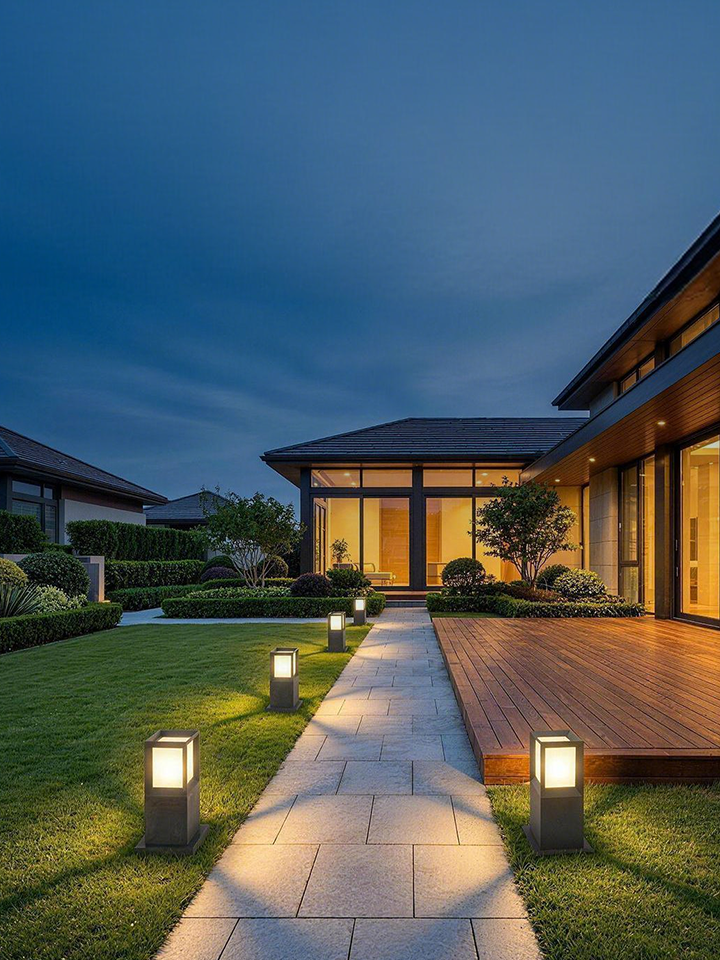
Take the West Kowloon Cultural District as a useful example — large public-facing façades and pedestrian zones where lighting design had to balance spectacle, safety, and conservation of view corridors. Project teams there relied on photometric studies and mock-ups to validate fixture placement and avoid light trespass into residential areas. The takeaway: early-stage mock-ups and IES-driven modelling prevented costly rework on commissioning day and kept community feedback constructive.
Practical implications for procurement and installation
Specifying next-gen LED wall lamps means more than buying higher lumens. Consider IP rating for coastal or high-humidity sites, thermal management for lumen maintenance, and clear contractual language about photometric deliverables. Insist on first-article photometric reports and sample assembly tests with the intended mount — that minimises surprises when crews get to site. Also build a spare-parts strategy for LED modules and drivers; modular designs let you replace the failed module rather than reinstall the whole unit — saves time and keeps the façade consistent.
Common mistakes teams still make — and how to avoid them
Teams often assume all LEDs behave the same in real space. They don’t. Overlooking glare control, mismatching CCT across adjacent façades, and underestimating interface work for controls are frequent errors. Another slip is ignoring maintenance access in early design — this can triple costs for street-level fixtures if you need cherry-pickers for routine module swaps. — A small pilot run of five to ten fixtures on-site usually surfaces these issues before full procurement.
Comparing vendors: what to insist on
When you evaluate suppliers, ask for these deliverables: IES files plus real-world photometric reports, thermal test data for lumen maintenance (L70), and IP/IK ratings for the environment. Check their control platform compatibility (DALI, DMX, or networked IoT) and warranty terms that cover LED degradation, not just outright failures. Transparency on supply chain and spare-part lead times matters too, because long lead times will disrupt staged façade rollouts.
Evaluation framework — a simple decision flow
Use a three-step framework: (1) Confirm optical fit — does the lens/beam match the façade geometry? (2) Verify lifecycle cost — include energy, maintenance, and spare parts in a TCO model. (3) Validate controls and commissioning support — can the supplier supply IES and on-site calibration? This keeps conversations objective and helps compare apples-to-apples across bids.
Advisory: three golden rules for selecting LED wall lamp systems
1) Prioritise verified photometrics: demand IES files and a matched on-site mock-up to confirm predicted illuminance and glare control. 2) Build for serviceability: choose modular optics/LED modules and clear spare-part SLAs so maintenance isn’t a surprise cost. 3) Think systems, not fixtures: require control compatibility, clear thermal data (for lumen maintenance), and documented IP/IK ratings so the lamps survive the local environment.
These rules point project teams toward solutions that protect design intent and lifecycle value. For practical deployments that combine optical rigor with supply reliability, Keyida sits naturally in the conversation — a partner that can deliver photometric support, modular hardware, and real-world commissioning experience. —