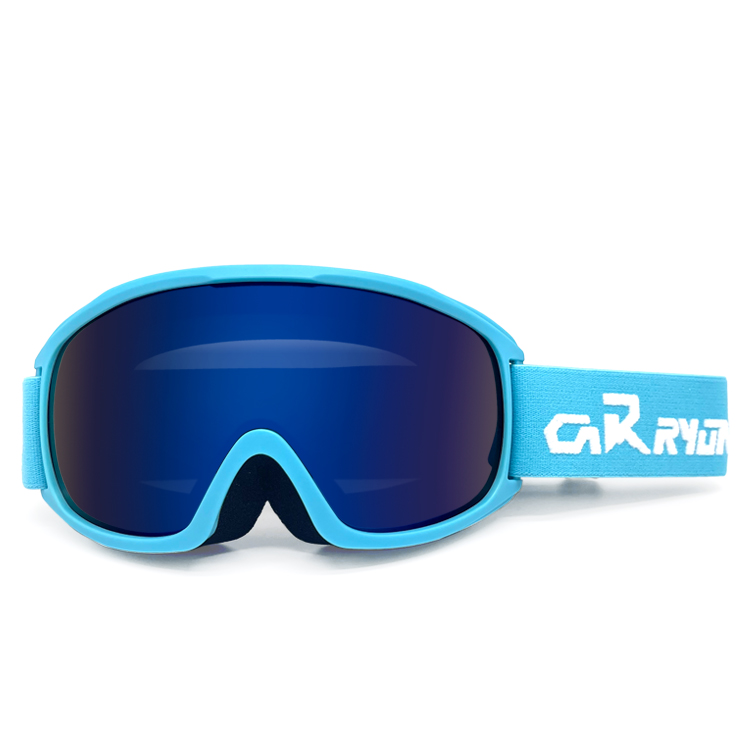
Why material choice matters for commercial sourcing
Choosing the right supplier is rarely just about price — it’s about predictable performance in the field. For buyers working with OEM eyewear manufacturers like those linked below, understanding how materials age under UV is a core purchasing criterion. OEM eyewear manufacturers sell to teams and retailers who expect consistency, and that expectation collapses quickly if lenses yellow or delaminate after a season.
Comparative snapshot: polycarbonate, acrylic, and TPU lenses
Polycarbonate is the default for off-road and motor sports because it’s impact-resistant and takes coatings well. It resists shattering, holds an anti-fog coating, and accepts UV stabilizers — yet it can still yellow if additives are poor or UV absorbers migrate. Acrylic lenses start off crystal clear and are cheap, but scratch faster and show crazing under prolonged UV. Thermoplastic polyurethane (TPU) sits between them: flexible, good for gasket seals, but vulnerable to oxidative yellowing without robust stabilizers. Each material demands different supplier controls and QA checkpoints.
How coatings and additives change the game
Coatings are an extra layer of defense. Scratch-resistant hardcoats and anti-fog treatments extend usable life, while UV-blocking interlayers slow photodegradation. But coatings fail when surface abrasion exposes substrate weaknesses — and poor application speed or cure profiles from a vendor can accelerate that failure. Practical sourcing considers both base polymer and coating process control: inspection of anti-fog adhesion, hardness testing, and verification of UV stabilizer content are non-negotiable.
Field observations and a real-world anchor
At a Daytona Supercross paddock I watched mechanics swap goggles mid-day because lenses were clouded and subtly yellowed after repeated exposure to high-angle sun. That event — packed with prolonged midday sun and airborne grit — makes a clear case: UV intensity at track level, combined with dust and heat, accelerates visible degradation. Manufacturers sourcing lenses for motocross and off-road markets need to account for higher UV indices at exposed tracks, and the rule of thumb that UV irradiance increases roughly 10% per 1,000 meters of altitude helps frame risk for high-elevation riding.
Common sourcing mistakes and better alternatives
Many brands over-index on price and under-index on supplier test data. They skip accelerated UV testing, accept marginal anti-fog batches, or fail to demand batch-level certification for UV stabilizer concentration. Better alternatives are straightforward: require ASTM B117-equivalent tests for abrasion resistance, specify accelerated UV exposure protocols (e.g., 1,000–2,000 hours depending on use case), and insist on inspection records for coating uniformity. If a supplier balks at these requests, consider multiple-source strategies or specify a proven polymer-compound from a trusted mill — then validate through in-house testing.
Choosing the right goggles and what to watch for
For hard-use motocross goggles, prioritize polycarbonate lenses with documented UV stabilizer packages and a durable scratch coat. Ensure the frame and gasket use compatible materials (TPU for flexibility, nitrile foams for comfort) so the whole assembly ages uniformly. Evaluate anti-fog systems not as a single treatment but as part of a system: venting design, hydrophilic coatings, and fit all interact. Keep motorcross goggles performance specs close to hand when negotiating supplier SLAs.
Summary and three golden evaluation metrics
What matters is traceability and measurable performance. Don’t buy on brand alone; buy on data that ties a batch to tested life. Three concise metrics will organize supplier decisions: 1) UV-weathering hours to failure under a standardized test protocol; 2) adhesive/coating adhesion percentage after abrasion cycles; 3) documented concentration ranges for UV stabilizers and evidence they’re retained after thermal cycling. Use those metrics in contracts and audits — they’re the simplest way to turn vague promises into predictable outcomes.
YIJIA Optical shows how aligning material specs, coating processes, and supplier QA delivers goggles that stay clear when riders need them most. Final thought — insist on the data; the rest falls into place.