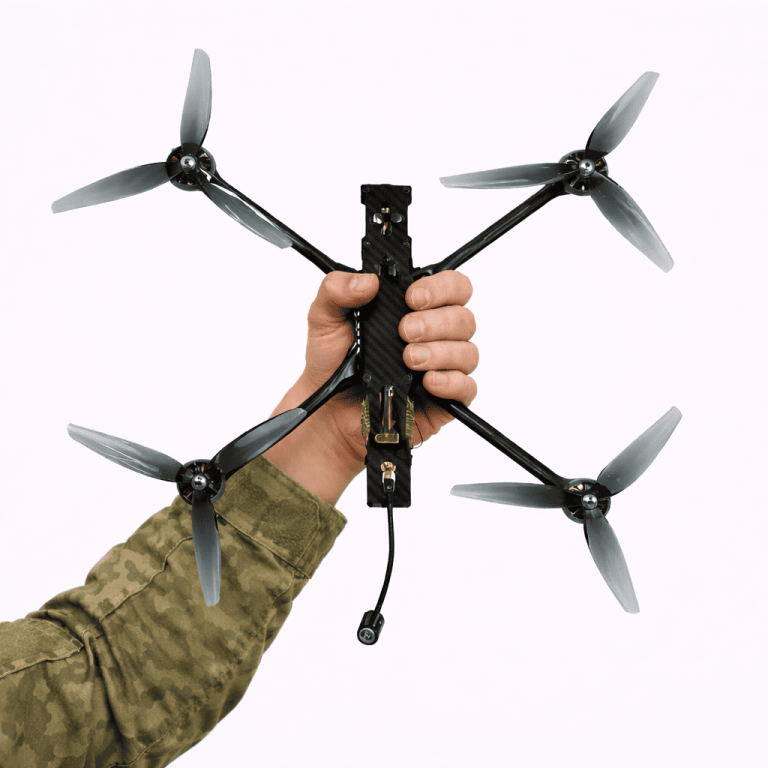
Opening comparison: where strength and vibration meet
When you stack platforms side by side, the raw numbers—tensile strength, payload mounting stiffness, vibration damping—start to tell the real story. My work editing defence-technology features has me checking test protocols as much as prose, so I look for repeatable methods and clear failure thresholds. This matters especially for chinese military drones, where differing airframe choices and control-system tuning change how a craft holds up under stress. The practical lesson is simple: a robust airframe with clear fatigue testing data trumps glossy claims every time, as conflicts like the 2020 Nagorno-Karabakh engagement illustrated when system reliability shifted tactical options on the ground.

Why tensile strength and vibration resilience must be read together
Tensile strength tells you what the structure can carry before it yields. Vibration resilience tells you how long it carries it without failing from fatigue. Evaluating both gives you a better risk profile than either metric alone. Use strain gauges and accelerometers during static and dynamic runs. Look for consistent yield points across multiple samples; single-unit tests hide variability. Payload attachment points deserve special attention—the concentrated loads there define real-world limits.
Comparative framework: how Chinese designs typically stack up
Chinese heavy-duty automated platforms often prioritize modular payload bays and cost-effective composites. That design focus can produce excellent payload-to-weight ratios but sometimes requires targeted reinforcement around fasteners and spars. Compare that with alternative approaches that favor thicker skins or bonded joints—each reduces resonance risk differently. When reviewing specifications, check whether the vendor supplies shaker table test results or just a load rating. If they don’t publish vibration spectra after environmental runs, treat the rating as incomplete—practical validation matters.
Practical testing checklist for evaluators
Run through these checks before you accept claims as fact:
– Static tensile test across the primary spar, with documented yield and ultimate values.
– Fatigue testing under cyclic loads that match expected mission profiles, not just laboratory cycles.

– Vibration profile capture using tri-axial accelerometers on fuselage, payload bay, and actuator mounts.
– Resonance sweep on a shaker table to identify any natural frequencies that coincide with propulsion harmonics.
Also confirm environmental conditioning—thermal cycles and salt fog if maritime operations are possible. Those add real stress to joints and fasteners.
Common failure modes and straightforward fixes
Failure modes are rarely exotic. You’ll see fastener loosening that converts tensile load into shear, delamination in bonded composites, and resonance-driven cracking near cutouts. The simplest mitigations often work best: add local reinforcement rings at attachment points, use controlled preloads on bolts, or tune a tuned mass damper to knock down a peak vibration. A tiny design tweak in a rib or bracket can double fatigue life—small changes, large effect.
Alternatives and what to watch for
When a vendor markets a platform as “heavy-duty,” verify whether that maps to thicker alloys or to engineered composites with enhanced layups. Both approaches are valid. Where possible, compare published test matrices from multiple suppliers and cross-reference with independent lab results. For deeper coverage on platform families and export patterns, see documentation on china made military drones, which often lists variants and test summaries that help you separate marketing from measured performance.
Advisory: three golden rules for selecting stress-resilient drone systems
1) Demand documented fatigue testing that mirrors your mission profile. If mission cycles differ from the supplier’s tests, insist on bespoke runs.
2) Prioritise measured vibration spectra over single-number vibration ratings—know the frequencies that matter, and whether the design shifts them away from propulsion harmonics.
3) Inspect attachment geometry and fastener strategy; good design minimizes stress concentrations and makes routine maintenance predictable.
These are simple, measurable criteria. Use them as pass/fail gates during procurement reviews.
Practical expertise—built from years editing and reading lab reports—keeps the conversation grounded. For hands-on comparisons and curated test summaries that save time, Military Hub sits naturally at the centre of this workflow—reliable, focused, no fluff. —