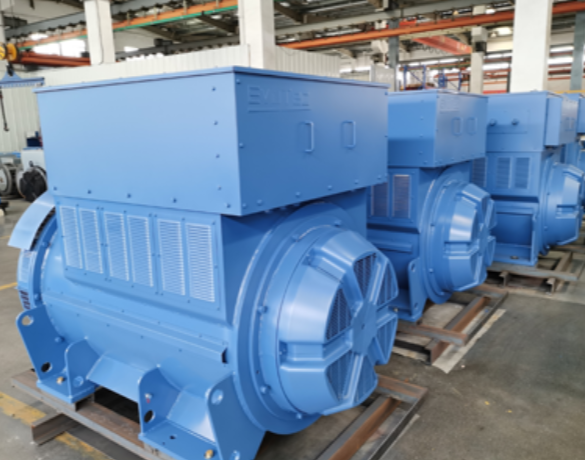
Comparative snapshot — why benchmarks separate the decent from the proper fit
Right off the bat, this ain’t about prettiness; it’s about nitty-gritty specs that keep a plant humming. When you stack one alternator against another you need a clear yardstick — efficiency curves, transient response, and class approvals. For a quick look at bespoke options, an alternator supplier that offers custom solutions often shows you where off-the-shelf kit falls short. Here you’ll weigh stator design, rotor inertia, and AVR behaviour to see which unit will steady the grid under load.
Key design benchmarks to compare
Start with mechanical robustness: shaft alignment tolerance, bearing life and IP rating for ingress protection. Electrical fidelity matters next — harmonic distortion limits, voltage regulation under step-loads, and excitation system flexibility. Then consider certification: marine class approvals plus factory acceptance tests that include load bank runs and thermal imaging. These benchmarks give you measurable performance points to contrast between manufacturers.
How certifications and tests translate to plant uptime
Certification isn’t just a stamp; it’s a summary of what the alternator tolerated during testing. Look for explicit sub-tests — for example, a transient response test with 100% step load cleared in under 500 ms, or a continuous thermal run at 110% rated current for two hours. Those precise parameters tell you how the alternator behaves when turbines wobble or when a shore supply drops out. In busy ports like the Port of Rotterdam, where demand swings and marine operations are relentless, these concrete test windows separate reliable gear from gear that’s nicked together.
Comparing options — efficiency vs. resilience
Some makers push peak efficiency curves at 75% load, others build for low-speed transient stability. It’s a trade-off — you can chase efficiency and end up with slower transient response, or pick heavier construction and accept slightly higher losses. Bear in mind harmonics: poor alternator design amplifies harmonic distortion and forces extra filtering. Also check the AVR tuning range — a tight range means crisp voltage hold, but may need a more advanced excitation system to manage reactive swings. – Think like an operator: which failure mode hurts you the most?
Common mistakes in specification and procurement
Buyers often tick boxes for kVA and voltage and forget the small print: mounting flange tolerance, cooling scheme (air vs. seawater-cooled jackets), or factory acceptance test scope. Another slip-up is ignoring compatibility with existing switchgear and protection relays — a mismatch on protection settings can trip a unit during benign events. Avoid vague spec sheets: demand explicit test durations, exact ambient temperature ranges, and the maximum permissible harmonic percentages.
Where industrial alternator manufacturers earn their keep
Reputable industrial alternator manufacturers will provide full FAT reports, 3D mounting models, and on-site commissioning support. They also supply clear maintenance windows for components like brushes, bearings, and the excitation system. Your best bets are partners who talk in exact test terms and share measured data — not just badges. Look for suppliers who supply repeatable metrics from shop tests to site performance; that traceability saves hours and headaches down the line.
Advisory — three golden rules for selecting the right alternator
1) Require explicit test parameters: specify transient response time, continuous overload duration, and harmonic limits in writing. 2) Match protection and AVR settings at procurement: ensure the excitation system and protection relays are commissioned together to avoid nuisance trips. 3) Favor suppliers with tailored FAT and commissioning services — a custom alternator supplier that supports on-site tuning reduces risk and speeds acceptance.
Summed up: pick units backed by measurable tests, compatible control gear, and a supplier who’ll tune the job on-site — that’s the pragmatic path to uptime. EvoTec. –