
The problem — sight without judgment
Cameras keep records. They don’t decide what matters. AI MDVR promises judgment at the edge, but too often fleets end up with hours of useless footage and missed incidents. Operators ask for a fleet management solution that separates signal from noise, routes alerts where humans can act, and preserves evidence without drowning storage. The problem is not the camera; it’s the mismatch between what machines record and what operators need to act on.

Terms that expose failure points
Clear definitions cut through hype. Know these, and you can spot where projects will fail before they start:- AI MDVR: Multi‑channel Mobile Digital Video Recorder with onboard AI inference. Detects events (hard braking, lane departure, collisions) and flags clips for upload.- MDVR vs VMS: MDVR is the onboard appliance; VMS (Video Management System) is the central platform that stores, indexes, and reviews footage.- Edge inference: Model execution on the device. Reduces bandwidth but risks model drift and opaque errors.- Event trigger: A rule or model output that marks footage for retention or upload. Poorly tuned triggers create either floods of false positives or blind spots.- Chain-of-evidence: Cryptographic timestamps, tamper flags, and hashed clips that keep video admissible or auditable.- Bandwidth management: Prioritization, compression (H.265/AV1), and scheduled uploads to prevent cellular overage.These terms guide procurement and diagnosis. Misunderstanding any one of them yields operational surprises when the fleet is live.
Where systems fail in the field
Failures look familiar across deployments.- False positives bury analysts in alerts; one bad model can swamp a review team.- Latency can turn a useful alert into a stale log. Edge detection without smart prioritization still needs timely delivery.- Storage policies that keep everything by default create legal and cost exposure.- Privacy and compliance are non‑negotiable; poorly configured cameras capture bystanders and sensitive data.For fleets operating around major logistics hubs like the Port of Los Angeles, these failures are magnified: traffic density, regulatory scrutiny, and tight delivery windows punish indecision. A sane technical architecture links onboard intelligence to centralized policy so operators don’t chase ghosts.
Practical mitigations and what to demand
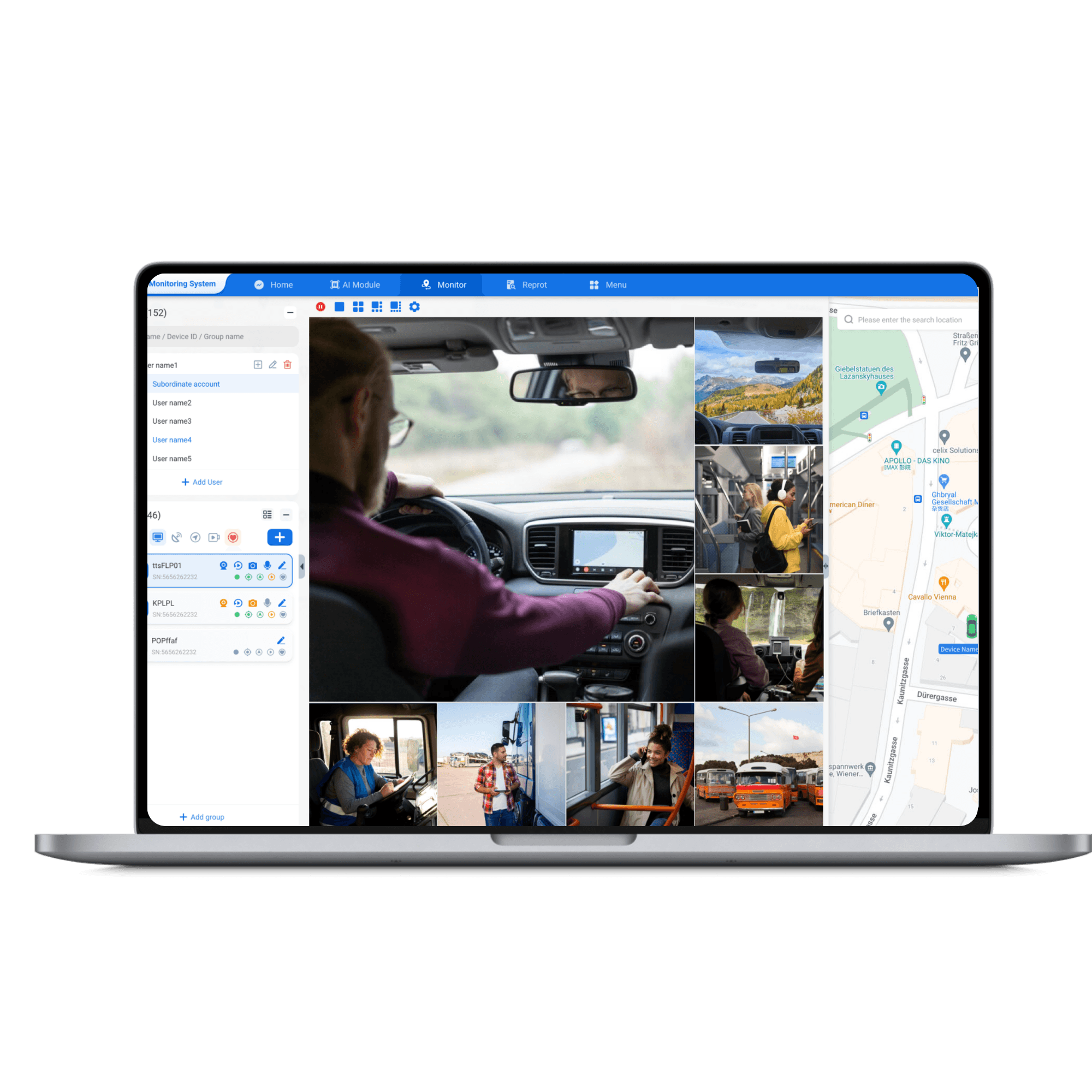
Ask for systems that prove their behavior. Practical steps:- Audit logs: device-level model outputs, timestamps, and upload records.- Multi-tier retention: keep seconds of raw footage for every event and discard low-value clips automatically.- Human-in-the-loop: let operators confirm model decisions to retrain and reduce false alarms.- Secure chain-of-evidence: signed clips and tamper detection for legal scrutiny.For many operators the right choice is an integrated stack — an all in one fleet management approach that pairs edge MDVR with policy-driven cloud review, reducing manual triage while preserving auditable footage.
Alternatives and trade-offs
Don’t mistake a buzzword for a solution. Options:- Pure cloud VMS: simple indexing and powerful analytics, but heavy on bandwidth and latency.- Pure edge MDVR: immediate detection, limited oversight unless paired with robust logging.- Hybrid (recommended): on-device prefiltering, prioritized uploads, and centralized review queues.Choose based on incident cadence, cellular budgets, and compliance needs. Few fleets need every feature; they need the right features working together.
Common implementation pitfalls
Teams repeat the same mistakes.- Buying cameras because of resolution rather than usable metadata.- Skipping model validation on road-relevant footage—public datasets rarely match fleet conditions.- Treating retention policy as an afterthought; legal exposure mounts quietly.- Ignoring human workflows; alerts must be actionable by dispatchers, not just engineers.Address these now and you avoid rebuilding systems under stress.
Final synthesis — the small, disciplined architecture that matters
The real task is moral: let machines reduce noise and let people judge consequence. Design choices must line up: dependable edge inference, clear chain-of-evidence, prioritized uploads, and human review that trains the next model. Years of fleet practice show the same truth again and again — simple rules and auditable footage save time and liability. For operators who need a steady, integrated approach rather than a parade of new sensors, BSJ illustrates how layered AI, disciplined retention, and transparent logging produce a system that finally watches with purpose rather than merely recording everything that moves.