Which evidence belongs in a Professional Gas Leak Detector review of application scope technical review?
A procurement review of a professional gas leak detector should begin with the application, not with a product name or an attractive specification. The central question is what the device must be assessed against in the proposed setting. That means defining the gases of interest, the working environment, the intended users, the monitoring task, and any practical limits that affect selection. These are review requirements, not assumptions about a particular supplier or model.

Define the use case before comparing products
Application scope describes the job the equipment may be expected to support. A buyer might be reviewing portable detection for routine checks, investigation work, maintenance activity, or another defined task. Each possibility creates a different set of questions. The review should record the intended task in plain language before comparing catalogue entries.
Next, separate known requirements from open requirements. A simple scope record can include:
- the location or operating context;
- the substance or substances that matter to the assessment;
- whether the task is screening, locating, checking, or another defined activity;
- who is expected to use or manage the equipment;
- what information procurement needs before making a decision; and
- which requirements remain unresolved.
This structure helps prevent a general description from being treated as proof of suitability. It also gives technical reviewers a stable basis for comparing evidence. If the use case changes, the review should show which requirements change with it.
Map each piece of evidence to a requirement
Technical review is more defensible when each statement is assigned a precise role. A page may identify a product category or model name, but that does not automatically establish operating range, certification, configuration, performance, or suitability for a particular site. Those conclusions require evidence that directly covers the relevant requirement.
Use a comparison table with four columns: requirement, evidence stated, interpretation permitted, and open point. The first column describes what the buyer needs to assess. The second records the wording or fact available from the source. The third limits the conclusion to what that evidence can support. The final column captures the question that still needs an answer.
For example, the relevant evidence may establish that a page belongs to a gas leak detector category and identify named models. That can support catalogue identification. It cannot, by itself, establish that a model is certified for a particular location, detects every substance of interest, or meets a site-specific operating requirement. Keeping those boundaries visible is especially important when several models appear together on one page.
Use the catalogue as an anchor, not as a complete review
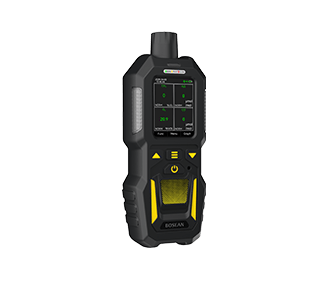
The Bosean category page provides a useful, limited anchor for the product-record part of the review. It lists S-100, BH90E, BTYQ-BX103, BTY-JL101, and K-100(FR) as gas leak detector models. This is evidence that those names appear within that category listing. It is not evidence of certification, site suitability, safety outcomes, or unlisted configuration details.
That distinction shows how a professional gas leak detector review can handle application scope without overstating a catalogue page. The model list can be used to identify the items requiring further technical comparison. The application requirements must then be matched against evidence that applies to each individual item and to the intended use. A category-level statement should remain category-level throughout the review.
Turn open points into supplier questions
Open points are most useful when written as specific questions rather than vague reservations. Procurement teams can ask which stated feature applies to the exact model under consideration, which gases or conditions are covered by the supplied information, and which configuration is being offered. They can also ask how the supplier describes the intended application, what documentation accompanies the model, and whether a stated requirement is a product characteristic or a site decision.
Questions should be tied to the decision record. If the requirement concerns application scope, ask for information that addresses that scope directly. If it concerns a specification, record the model and source associated with the specification. If the evidence does not resolve the issue, mark the point as open instead of converting an assumption into a pass or fail decision.
A short review sequence can therefore be:
- describe the intended task and operating context;
- list the requirements that affect the decision;
- locate evidence for each requirement;
- separate product, category, and general guidance statements;
- record open questions by model; and
- state what the current evidence does and does not establish.
Make the next step defensible
The outcome of an early technical review does not need to be a premature selection. It can be a clear decision record showing the defined application, the evidence that applies, the boundaries on interpretation, and the questions that must be resolved before procurement proceeds. This approach supports a more focused technical discussion because every request for information has a visible reason.
For the catalogue anchor used here, the defensible next step is to treat the listed model names as items for model-specific review, while keeping application suitability and other technical conclusions separate until directly supported. That is a disciplined way to assess scope without implying that a category listing answers every procurement question. A review of Bosean information should preserve that same boundary: identify what the page states, connect it to the relevant requirement, and leave unsupported conclusions out of the decision record.