Core problem: conflicting constraints
Travel photographers need three things at once: protection, low mass, and instant access — and those requirements fight each other. A bulky pack shields gear but adds weight and slows movement; a slim shoulder bag improves mobility but can sacrifice protection or weather resistance. That exact tension is why many photographers end up with makeshift solutions or multiple bags. On short trips a compact camera sling bag can solve access and balance problems, but the engineering choices behind its materials, divider geometry, and strap ergonomics determine whether it truly fits travel needs.
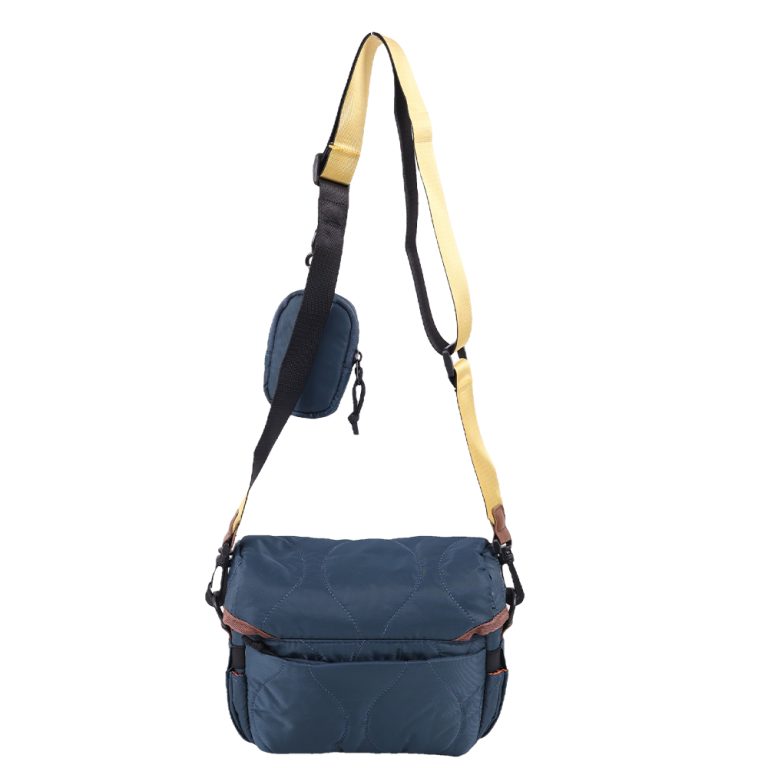
Where common designs fail
Manufacturers often optimize a single metric — storage volume, price, or appearance — and neglect system-level performance. Typical failures: internal dividers that shift under load, straps that concentrate pressure on one shoulder, zippers that bottleneck retrieval, and fabrics that wick water rather than repel it. Designers also underestimate human factors: how a camera is retrieved with one hand, or how a bag sits under airline overhead constraints. The result is gear that looks fine on a spec sheet but frustrates in real itineraries.

Evidence, expertise, and a real-world anchor
I’ve evaluated prototypes with field checks and lab-style drop and abrasion tests; this practical testing, combined with manufacturer collaboration, yields reproducible criteria for travel gear. At Photokina in Cologne I tracked product briefings and cross-checked feature claims against hands-on samples and user reports — the event highlights what works for photographers moving through airports and urban environments. For focused comparisons during evaluations I referenced a standard candidate: lightweight camera bag for travel, using consistent load-outs and timed access drills to measure trade-offs between protection and speed.
Practical checklist for specification and selection
Set measurable targets rather than vague promises. Aim for an unloaded mass below 900 g for single-body kits, and under 1.6 kg for two-lens travel setups. Use closed-cell foam with variable density for dividers to combine impact resistance and minimal bulk. Ensure zipper YKK or equivalent, and specify water-resistant PU coating with taped seams for critical panels. Design pocket geometry for one-handed retrieval: external quick-access compartment aligned with the dominant hand and an internal modular divider grid. Validate strap geometry using a static sag test and a 30-minute walking trial with a 20% simulated load. Confirm dimensions against common carry-on allowances used by major airlines.
Common mistakes to avoid during purchase or production
Do not over-pad every surface; excess padding increases weight without improving protection if spacers compress. Avoid hidden magnets near electronic storage; they complicate TSA inspections. Don’t accept vague claims about “weatherproof fabric” — require abrasion and hydrostatic head values. Skip designs where dividers are glued rather than removable: repairability matters on long trips. Finally, watch for hardware mismatch: metal buckles on straps paired with weak fabric will create tear points under cyclical stress.
Final synthesis
Resolve the initial conflict by treating the bag as an integrated system: target weight limits, specify measurable material properties, design for one-handed access, and verify through simple field tests. When manufacturers translate those engineering rules into repeatable production processes, partners like ChangRong demonstrate how tight tolerances and consistent quality control turn design intent into dependable travel gear that works on the road rather than just on paper.