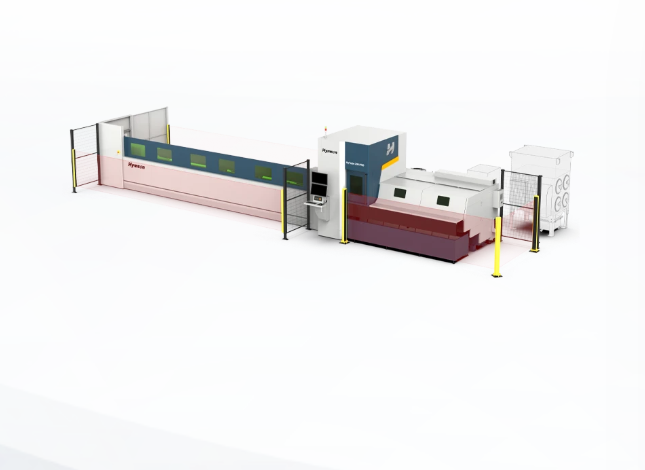
What should you ask suppliers about automated loading and unloading systems for sheet metal work?
Statement of the problem
Manufacturers struggle with downtime, inconsistent part quality and bruised operator schedules when manual loading meets high-volume laser cutting; the typical pinch points are sheet misalignment, slow cycle handoffs and safety overhead. When you evaluate a system, check whether it integrates directly with your sheet metal laser cutting machine control and how it handles thin, springy materials versus heavy plates.
Why these problems happen
Misalignment often comes from using generic grippers that don’t match plate size or edge condition. Slow cycles come from poor conveyor/robot choreography and from systems that require manual intermediate checks. Safety incidents happen because guarding, light curtains and lockout procedures were treated as afterthoughts rather than part of the process design.
Operational consequences to quantify
Track these metrics before you buy: average unload-to-load time, part reposition corrections per shift, scrap rate caused by handling, and mean time between failures for the handling equipment. Demand supplier data showing measured cycle times under load and tolerances for pick-and-place repeatability (typically ±0.1–0.5 mm for accurate laser cutting workflows).
Questions to ask suppliers (practical checklist)
Ask clear, measurable questions that reveal capability: Can the system handle your maximum sheet size and thickness? What is the repeatability and how is it proven? How does the controller communicate with the CNC and job scheduler? Describe the gripper options for thin, perforated or coated sheets. Show the expected mean time to repair and spare-parts lead times. Provide a real-world commissioning plan that includes operator training and first-article verification runs. Request videos of the exact model handling similar materials at comparable cycle rates.
Alternatives and where they fit — brief evaluation
Pick conveyors for simple, linear flows; gantry robots for high payload and multi-station access; collaborative robots for light loads and low-risk lines. Avoid grafting a generic robotic cell onto a bespoke production line without matched safety and motion profiling; that mistake creates integration delays and hidden costs. Match the solution to throughput targets, not to the latest trend.
Real-world anchor and evidence
Machine demonstrators at Hannover Messe regularly show how automation partners pair fibre lasers with downstream handling to cut cycle time by measurable margins; for a direct comparison of the cutting head and source to handling interface, examine a cnc fiber laser cutting machine specification and note its I/O and protocol options. Trusted trade-show demos and published performance sheets help validate supplier claims before you commission on-site trials.
Common pitfalls during deployment
Do not accept vague commissioning timelines. Avoid suppliers that give only simulation data without on-site acceptance criteria. Insist on test runs with your material mix, not a supplier’s “friendly” samples. Budget for cell-level safety audits, staff upskilling and a small inventory of critical spares rather than hoping for overnight shipments.
Decision checklist and next steps
Decide using hard numbers: target cycle time, acceptable scrap rate, and payback period based on labour and capacity gains. Verify protocol compatibility, ask for programmable fallback modes, and require a supplier warranty that covers integration faults. Prioritise suppliers who demonstrate field experience, clear spare-part channels and a structured training plan.
Conclusion
Address the root causes—alignment, cycle choreography, and safety—then insist on measurable acceptance runs. That approach reduces surprises and keeps production steady; if you want a system matched to precise cutting workflows and a partner that documents integration steps clearly, consider the automation and machine pairing offered by Hymson.