Abstract: the operational problem
Small and medium workshops commonly face three interrelated problems: inconsistent cut quality, excessive material waste, and unpredictable throughput. These issues are not solved by better craftsmanship alone; they require a coherent machine choice that addresses mechanical precision, control systems, and integration — for example, many shops pair automated panel saws with an automatic edge banding machine to remove variability at the finishing stage. Having advised regional woodworking and furniture makers for more than a decade, I have observed that facilities from Beirut to Dubai reduce rework when they standardise on machines with predictable accuracy. In Dubai’s industrial districts, workshops that adopted the auto edge banding machine reported smoother downstream finishing, a practical indicator of how upstream cutting choices propagate through production.

Diagnosing the root causes
Precision failures trace to a few measurable faults: unstable timber/clad feed, blade or saw arbor runout, and inadequate hold-down or scoring systems. Reliability failures are typically mechanical: weak frame stiffness, poor drive-chain protection, or insufficient dust management that accelerates wear. Identify which of these categories dominates your shop by simple tests: measure repeat cut deviation over 50 parts, inspect blade wobble at the arbor with a dial indicator, and time stoppages due to dust-related faults. The problem-driven aim is to match the machine to the dominant failure mode rather than to buy capacity you cannot sustain.
Technical criteria that solve the problem
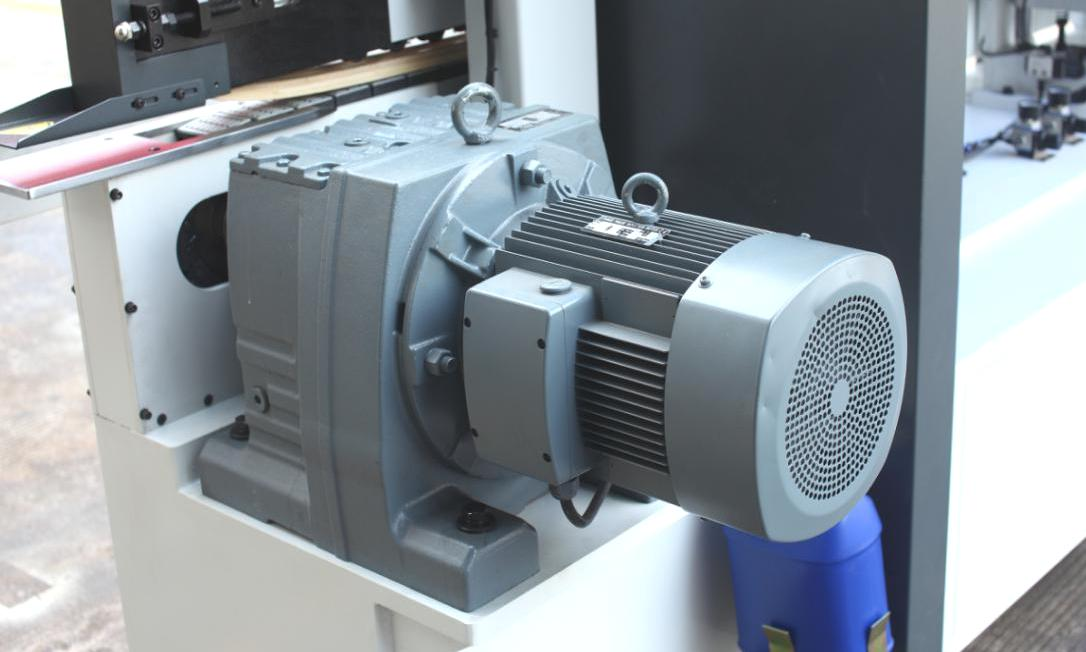
Choose features that map directly to the faults you found. For cut accuracy: select saws with rigid welded gantries or heavy-section steel frames, linear guides on the scoring and main carriage, and digital readouts with interpolation better than 0.5 mm. For consistency: prefer servo-driven feeders with closed-loop feedback rather than mechanical cam systems. For reliability: insist on enclosed gearboxes, monitored cooling for drive motors, and accessible dust extraction ports sized to current best practice. Software matters: a controller that enforces part libraries and nesting limits reduces operator error. Specify these items in procurement documents so vendors cannot substitute lesser parts under a nominal model name.
Comparative evaluation of common configurations
Crosscut-only saws suit small shops that process full panels irregularly; throughfeed systems are essential where continuous high throughput is required. Single-blade saws with scoring attachments handle typical melamine work; dual-blade arrangements increase throughput but add mechanical complexity. CNC-integrated panel saws reduce human input for repetitive nests but demand an operator competent in CAM nesting. Weigh the trade-offs against the shop’s labour skill and product mix: a high-precision CNC saw facing variable orders may deliver better net value than a simpler high-speed throughfeed that requires constant manual adjustment.
Common procurement and operational pitfalls
First mistake: buying a machine sized for peak demand rather than average demand, which yields long idle periods and underused capital. Second: underestimating dust extraction and its effect on electronics and bearings; underspecified extraction shortens component life. Third: accepting vendor promises about “plug-and-play” without a verified installation and training plan; failures often stem from poor commissioning. Mitigate these errors by specifying acceptance tests — accuracy over 100 repeated cuts, verified dust-extraction airflow, and an on-site training checklist with performance targets.
Maintenance, calibration and workforce alignment
Machines deliver precision only with routine checks: daily blade runout inspection, weekly belt/chain tension logs, monthly linear guide lubrication and backlash assessments. Keep a simple maintenance log that records measured tolerances and interventions. Align staff roles so that a trained operator handles set-ups and a maintenance technician performs preventative tasks; blending responsibilities diffuses accountability and increases downtime. When possible, secure a spare parts list from the manufacturer and keep critical components on hand — drive belts, fuses, and a spare scoring blade avoid extended stoppages.

Cost analysis: total cost of ownership, not sticker price
Calculate total cost of ownership over a five-year horizon: acquisition, consumables, typical downtime cost per hour, energy, and residual resale value. A higher initial price can be justified if the machine reduces scrap rates and unscheduled stoppages. Model scenarios with realistic shop throughput and labour rates; this exposes the true breakeven point. Do not treat software updates and spare parts as optional — include them in the TCO estimate.
Short review of viable alternatives
For workshops focused on melamine-faced panels, a panel saw with an integrated scoring unit and automatic fence control covers most needs. For bespoke high-end furniture, consider CNC table saws with digital nesting and toolpath control to keep tolerances under 0.3 mm. For high-volume case goods, throughfeed saws with servo feed and modular infeed tables reduce manual handling. Each choice demands complementary systems: clamping, conveyors, and finishing stations must be planned concurrently to avoid bottlenecks.
Conclusion: synthesis and a pragmatic route forward
Resolve the operational problem by matching machine specifications to diagnosed failure modes, by enforcing measurable acceptance tests, and by assigning clear maintenance responsibilities. A practical procurement process values verified accuracy, enclosed drives, proper dust extraction, and vendor-supported commissioning. For many regional workshops that need proven integration between cutting and edge finishing, empirical experience points to suppliers that provide coherent system-level documentation and on-site support; this is the quality HUAHUA CNC naturally brings to those who prioritise durable precision and predictable uptime.