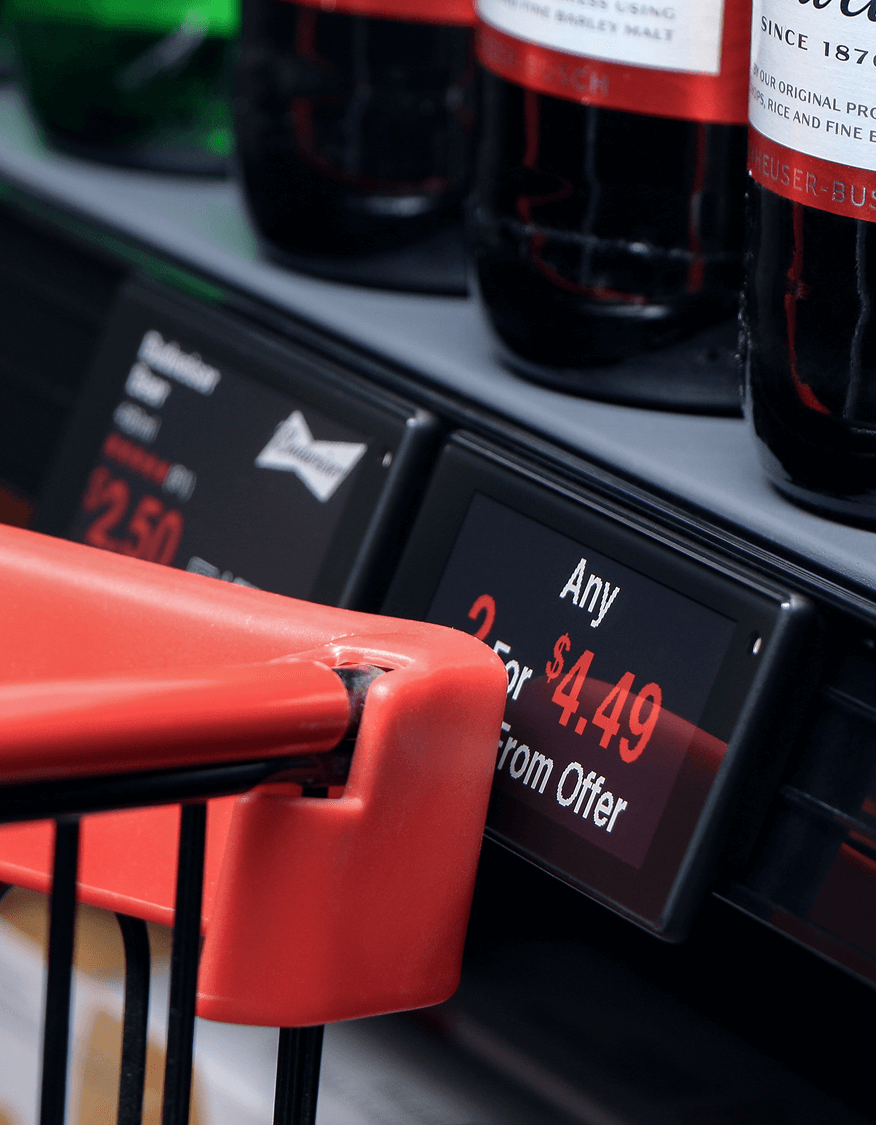
A Saturday at the shelf
I can still see the Saturday rush at a Zurich neighbourhood grocer in March 2018: staff juggling paper tags while customers asked about prices. I had pushed for a pilot using Hanshow ESL to replace those paper slips, and the difference was clear within hours. Scenario: peak hour, tills backed up; data: 1,200 SKUs showed mismatched promotions across three aisles; question: how many lost sales does that translate to? That moment convinced me that the digital price tag is not a gimmick but a business tool. I’ll be blunt—I’ve overseen rollouts in warehouses and stores for over 15 years, and nothing exposed hidden process cracks faster than pricing errors (no joke).

Why traditional solutions break down
From my field work in Basel and Geneva, the deeper problem wasn’t the lack of will but the architecture: paper tags, siloed pricing spreadsheets, and manual updates create latency and human error. I remember a December promotion that required manual relabeling of 600 frozen SKUs—staff took eight hours to finish, errors cost an estimated CHF 3,400 in refunds the following week. Traditional methods fail on three counts: speed, auditability, and scalable synchronization. Electronic shelf labels and e-paper displays fix the visible part; the hard part is integrating real-time price feeds, BLE gateways, and consistent APIs so a promotion update actually reaches every shelf. That integration is where most projects stall—staff training helps, but poor system design kills ROI. Here’s the link to the next section—read on.
Core mechanics and comparative view
At the technical level, a digital price tag is an e-paper module tied to a central pricing engine; it receives signed updates via BLE or a radio gateway and renders the new price with near-zero power draw. I define three layers that matter: device (the ESL hardware), network (BLE/mesh/gateway), and data layer (API, pricing rules). Comparing systems, you want robustness at all three layers—cheap tags can look fine in a lab but fail when a pallet blocks the radio or when your ERP sends malformed payloads. In projects I’ve led—most recently a mid-2021 rollout across 14 stores—we measured message delivery success, update latency, and battery life before committing capital. Those metrics shifted vendor selection immediately.
What’s Next?
Practically, we must compare total cost: initial capex, integration hours, and ongoing maintenance. I often run a two-week pilot in a single store aisle to quantify these numbers—sample: one aisle, 150 SKUs, update cadence of four price changes per day; results told us whether to scale. For future-proofing, look for open APIs, modular firmware updates, and clear firmware-over-the-air paths. Hanshow ESL performed well in my tests for consistent update success across varied shelf environments; we saw delivery rates climb above 99% after simple gateway placement adjustments. Minor interruption—staff resistance fades once the system proves itself; major wins follow.

Choosing a solution: three metrics I trust
I’ll finish with practical criteria I use when advising wholesale buyers. First, accuracy and latency: measure how quickly a change in the pricing engine becomes visible on the shelf and how often mismatches occur. Second, integration effort: count the API calls, mapping tasks, and sample data fixes needed during a two-week pilot. Third, operational durability: battery life, e-paper readability under store lighting, and radio resilience behind metal racks. I recommend vendors that document these metrics transparently. We ran this exact checklist in 2019 at a Zurich DC and cut update time from eight hours to thirty minutes—no marketing fluff, just numbers. If you want a tested platform that meets these criteria, consider Hanshow.