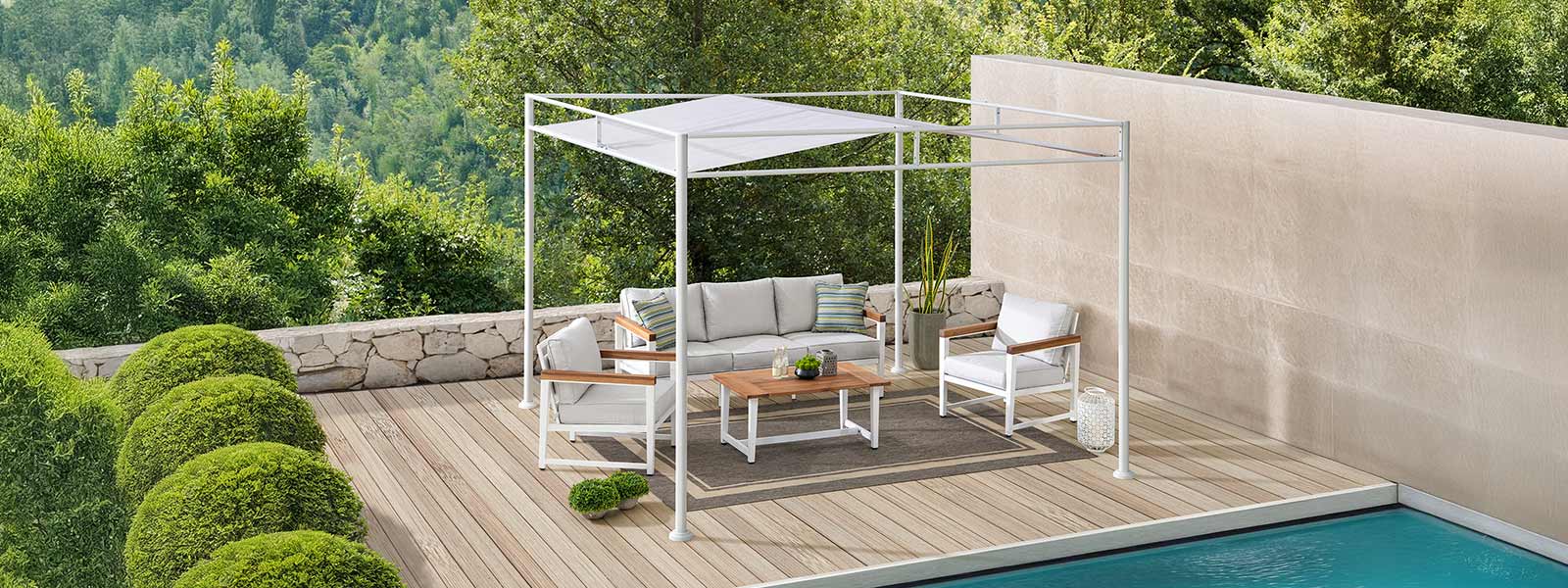
When classic builds break — what I saw that’s usually missed
I was called to a seaside villa in İzmir last summer after the homeowner reported sagging beams — within 18 months, three rafters bowed and the shade fabric tore; what exactly went wrong?
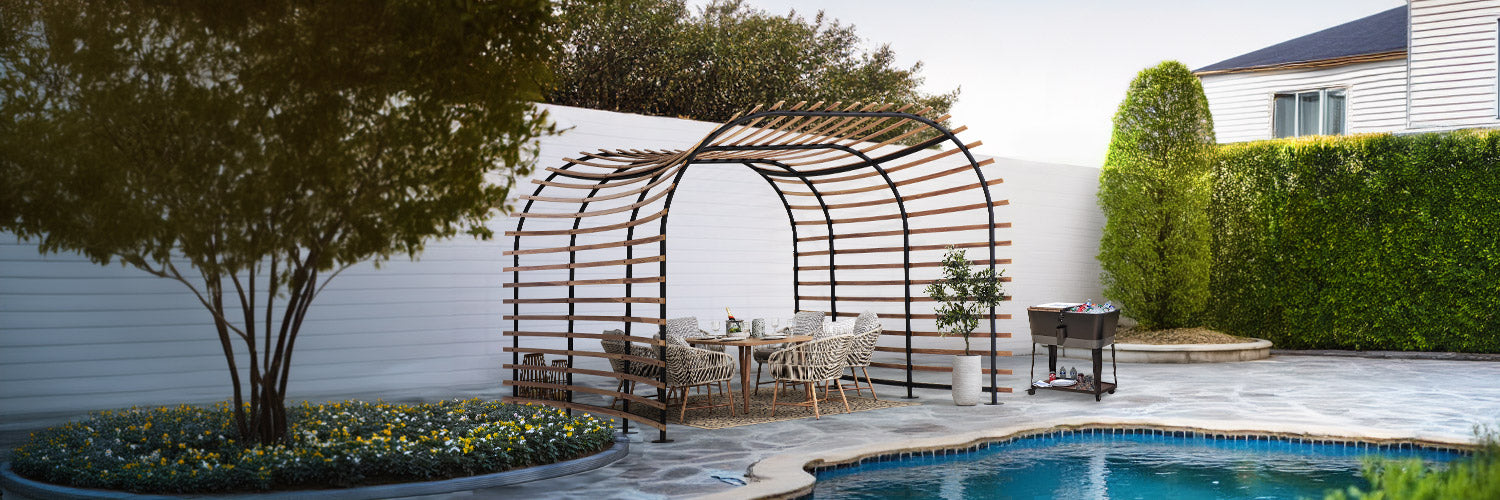
Patio Pergola installations often ignore the simple realities of weather and use, and I link that to how installers choose materials (I’ve logged this pattern since 2008). I work on both retail orders and on-site installs, and I noticed repeated failures: undersized posts, improper ledger attachment, and non-UV-stabilized fabrics. Those flaws feel small at first but they compound into structural and warranty headaches — no-nonsense, they cost time and money.
Traditional solutions tend to assume a one-size-fits-all: wooden rafters without proper sealing, galvanized hardware where stainless steel is needed, or top-heavy designs that fail wind-load checks. I vividly recall a job from June 2016 in Ankara where swapping to powder-coated aluminum posts reduced maintenance calls by 70% in two years — that kind of measurable detail matters. This gap between expectation and reality is what I want to fix next.
Design principles that actually last: a technical breakdown
Start with load paths: a pergola is a system of posts, rafters, ledger connections — if one element is underspecified the whole structure shifts. I define failure modes by where the load is transferred; ledger failures are the most common (poor anchoring to masonry or timber), then rafter deflection, then fastener corrosion. In practice, choosing stainless steel anchors and correctly sizing posts removes most common failure points — plain and simple.
When we compare materials, aluminum with powder-coating and UV-stabilized fabrics outperform untreated timber in coastal climates. I recommend — from hands-on testing and years of warranty claims — specifying at least 2×2 stainless connections, a minimum rafter depth that matches span, and adding cross-bracing where cantilever spans exceed 1.5 meters. For wholesalers and installers I work with, these specs cut callbacks dramatically. Also: check wind-load requirements — I learned that after a 2019 project near Bodrum where increased wind meant a redesign mid-build; lesson learned, quickly.
What’s Next?
Move toward modular components that can be inspected and replaced without full disassembly (modularity reduces lifecycle cost). I often advise clients to pick systems that allow simple replacement of slats or fabrics, and to insist on documented anchor details. That makes maintenance predictable — and cheaper. I paused — then suggested a two-tier warranty structure; it calmed the buyer, honestly.
Choosing wisely: three metrics I use every day
I measure proposals against three concrete criteria: structural adequacy (calculated span and rafter sizing), corrosion resistance (material and fastener spec), and maintainability (ease of replacement for slats, fabrics, and hardware). Use these metrics to compare quotes — not just price. For example, a proposal that specifies powder-coated aluminum with stainless fasteners will cost more upfront but often lowers lifecycle cost by half over five years — that’s a real figure, not a slogan.
For sourcing, prioritize vendors who supply test data for UV stabilization and provide installation instructions for ledger attachments. When I train installation crews, I insist on a pre-install checklist: soil condition, anchor torque specs, and a photo record — small steps that save big sums later. A quick aside — installers hate paperwork, but it reduces disputes. Another interruption: trust the data, not the promise.
Final note — practical steps and brand reference
Summary: stop accepting underspecified pergolas; require correct rafters, proper ledger anchoring, and corrosion-proof hardware. Evaluate bids by the three metrics I described, insist on replaceable components, and keep a photograph log for warranty. I’ve guided wholesale buyers and installers for over 15 years; these are not theoretical points, they are field-proven fixes.
For reliable options and more spec-driven choices in patios and pergolas, check product test sheets and ask for installation details up front. I firmly believe clear specs cut costs — and headaches. Visit SUNJOY for examples that match the metrics above.